Donate to Wildlife Conservation in Africa: Protect Elephants, Rhinos and the Communities Beside Them
How to donate to wildlife conservation in Africa through a 501(c)(3): ranger teams, anti-poaching, elephant tracking and community conservancies. See what each gift funds and how results are measured.
GiveToAfrica team · · 11 min read
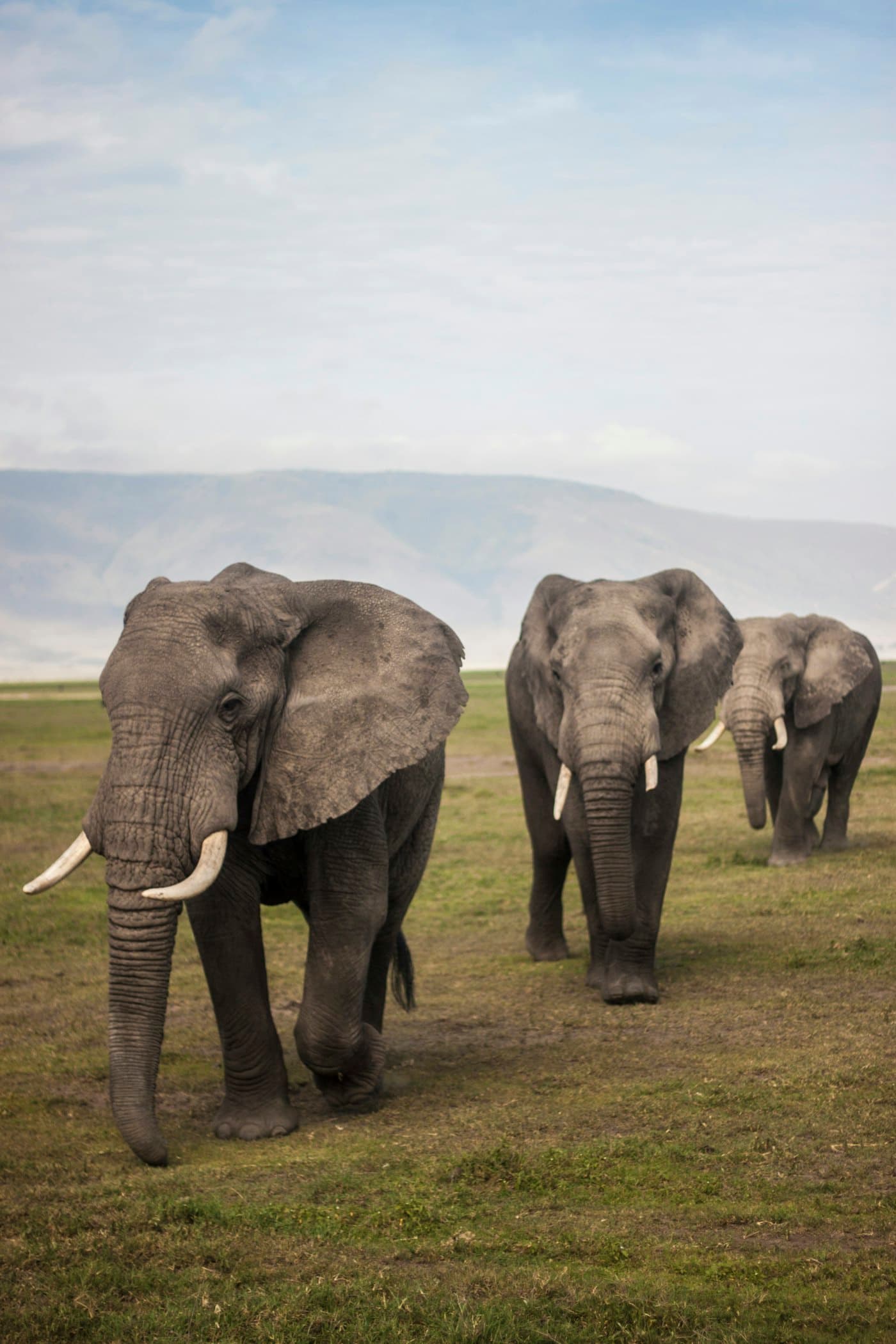
Illustrative photo: Matthew Spiteri / Unsplash
If you want to donate to wildlife conservation in Africa, you are protecting some of the most remarkable animals on Earth. Elephants, rhinos and the wild places they need are under real pressure. This guide explains which conservation work makes the biggest difference, what it costs, and how to give safely from the United States.
We'll also show how to give through GiveToAfrica, a registered 501(c)(3) nonprofit, EIN 27-3982730. You choose a conservation cause, your gift is recorded against it, and every quarter you receive a field report on patrols, animals monitored and communities involved.
Why donate to wildlife conservation in Africa
Africa's elephants show how serious the situation is. In 2021, the IUCN assessed Africa's two elephant species separately for the first time. It listed the African forest elephant as Critically Endangered and the African savanna elephant as Endangered, after decades of poaching for ivory and loss of habitat (IUCN).
However, the same assessment showed that conservation works. Where anti-poaching measures, good laws and careful land-use planning are in place, some elephant populations have stabilised.
Therefore, the question is not whether conservation can succeed. Instead, it is whether enough well-run conservation is funded. That is where your gift comes in. Even a modest gift, given steadily, keeps rangers on patrol and collars transmitting through the seasons when poaching peaks.
Moreover, conservation is not only about animals. Wildlife lives alongside people, and communities pay the cost when elephants raid crops. Consequently, the most effective conservation makes wildlife worth more alive to the people who live beside it.
Why donate to conservation through GiveToAfrica
Conservation appeals often show a baby elephant and ask for a donation. We work differently. Instead, every conservation cause shows its budget, targets and gift amounts before you give.
For instance, the elephant and rhino protection budget puts 40% into local ranger teams and 22% into tracking and surveillance. Meanwhile, 20% goes to community benefits, such as jobs and revenue sharing. Finally, 8% funds veterinary care, and 10% covers monitoring and your report.
Additionally, GiveToAfrica is a registered 501(c)(3) nonprofit, EIN 27-3982730. Consequently, gifts from US donors are tax-deductible to the extent allowed by law, and your email receipt arrives as soon as your payment clears.
Most importantly, we measure results. Our targets include a 50% fall in poaching incidents in the protected area we support. You can read why we send field reports and how we work.
Our Services: conservation work you can fund in Africa
Protecting wildlife takes rangers, technology, habitat and community support. Here are seven kinds of conservation work you can fund through our wildlife and conservation causes.
Ranger teams that protect elephants and rhinos
Rangers are the front line of conservation. Our elephant and rhino protection cause funds salaries, training and equipment for local ranger teams in partner conservancies.
For example, $50 funds a day of tracking for a rhino monitoring team. Our target this round is 40 rhinos monitored every day. Consequently, rangers can respond quickly when an animal is in danger.
GPS tracking collars and camera traps
Technology lets small teams protect large areas. Through the same cause, $500 buys a camera trap and a year of monitoring data. Meanwhile, $4,000 buys a GPS tracking collar for an elephant.
Collars show where elephants move in real time, so rangers can anticipate danger and warn nearby farmers well before crops are raided. Our target is 10 elephants collared this round, covering the herds most at risk.
Anti-poaching training and pay
Poaching is organised and often dangerous, and rangers risk their lives to stop it. Therefore, rangers need professional training, good equipment and fair pay. When rangers are recruited from nearby villages, they also bring local knowledge and trust that outsiders cannot. Our anti-poaching cause funds both, with 90% of rangers recruited locally.
For instance, $75 buys boots and a uniform for one ranger. Similarly, $400 pays a month's wages for a community ranger, and $3,500 equips a ranger team with radios and night-vision equipment. Our target is 40 rangers trained and equipped.
Snare removal and patrols
Wire snares kill and maim countless animals. Consequently, regular patrols to find and remove them save many lives. Our anti-poaching target is 1,000 snares removed and 3,000 patrol kilometres logged every month.
In addition, detection dog units at checkpoints help stop trafficking of ivory and horn. The anti-poaching budget puts 20% into dog units and their handlers.
Restoring habitat and wildlife corridors
Wildlife needs room to move. Elephants in particular travel long distances between feeding grounds and water, and blocked routes push them into farms. Our national parks cause funds habitat restoration around protected areas, including the corridors animals use to move between them.
For example, $80 buys tree seedlings to restore two hectares of corridor. Our target this round is 500 hectares restored.
Dry-season water for wildlife
In the dry season, animals travel long distances for water, often into farms and villages. Through national parks, $6,000 installs a solar-pumped water point for wildlife. Our target is four water points installed.
Consequently, animals can stay in protected areas, and conflict with farmers falls. Our target is a 30% fall in human–wildlife conflict incidents.
Community conservancies and school fees
Conservation lasts when local people benefit. Therefore, our national parks cause helps communities earn from conservation and tourism. For instance, $350 pays a year of school fees for a conservancy family's child.
Our target is 400 households earning from conservation. Similarly, the elephant and rhino budget employs community members, with a target of 60 jobs. In other words, wildlife becomes an asset to the community, not a threat.
Where each dollar goes
Every conservation cause publishes its planned budget. For example, when you fund anti-poaching, about 40 cents of every dollar pays for ranger training and wages. Next, 20 cents funds detection dog units, and 20 cents buys equipment. Finally, 10 cents supports informant and community networks, and 10 cents covers monitoring and your report.
Therefore, you know how a $100 gift will be split before you give. Every quarter, the field report compares the plan with what was actually spent.
People and wildlife: why community comes first
Many conservation efforts have failed because they ignored local people. For example, when a park is fenced off and neighbours lose grazing land without any benefit, poaching often rises.
By contrast, when communities earn from wildlife, they protect it. That is why a fifth of the elephant and rhino budget goes to community benefits, and a quarter of the national parks budget supports community conservancies.
Similarly, conservation connects to other causes on our site. For instance, farmers who lose crops to elephants may need agriculture support to recover. Meanwhile, children in conservancy families benefit from scholarships and school meals. As a result, conservation and development work best together.
What a gift to wildlife conservation in Africa can fund
Here are examples from our current budgets, to help you choose a level.
$50 to $100
A gift of $50 funds a day of tracking for a rhino monitoring team. Meanwhile, $75 buys boots and a uniform for one ranger, and $80 buys tree seedlings to restore two hectares of wildlife corridor.
$350 to $500
At this level, $350 pays a year of school fees for a conservancy family's child. Similarly, $400 pays a month's wages for a community ranger, and $500 buys a camera trap plus a year of monitoring data.
$3,500 to $6,000
Larger gifts fund equipment and infrastructure. For instance, $3,500 equips a ranger team with radios and night-vision equipment, $4,000 buys a GPS collar for an elephant, and $6,000 installs a solar-pumped water point for wildlife.
Why rhinos need daily monitoring
Rhinos are among the most targeted animals in Africa, because their horn fetches high prices on illegal markets. Therefore, many conservancies monitor every rhino every day.
Daily monitoring means rangers know where each animal is and how it is doing. Consequently, they notice quickly if an animal is missing, injured or unwell, and vets can respond. Moreover, the constant presence of rangers deters poachers. That is why our target is 40 rhinos monitored daily.
Wildlife conservation in Africa and a changing climate
Droughts are becoming more frequent in many parts of Africa. As a result, wildlife and people increasingly compete for the same water and grazing. Consequently, wildlife conservation in Africa now includes climate adaptation.
For example, dry-season water points keep animals inside protected areas. Meanwhile, drought resilience projects help farmers near parks cope with dry years, so they rely less on land that wildlife needs. You can read more in our guide to supporting farmers in Africa.
Been on safari? Give something back
Many donors first fall in love with African wildlife on safari, in places such as Kenya's Maasai Mara or Tanzania's Serengeti. If that is you, a gift to wildlife conservation in Africa is a natural way to give back.
Well-run tourism already helps conservancies earn money from wildlife. However, many communities beside parks still see little of that income. Therefore, gifts that fund community conservancies and school fees help spread the benefits more fairly. In other words, your gift helps make sure the animals you saw are still there for the next generation.
How to donate to wildlife conservation in Africa from the USA
Here are the ways US donors most often fund conservation.
Donate online
The quickest way is our donation page. First, choose a cause such as elephant and rhino protection. Next, pick an amount; gifts start at $50. Then complete the secure form, and your receipt arrives by email.
Give monthly
Rangers are paid every month. Therefore, monthly gifts are especially valuable for conservation. When you pay by card, choose "Monthly" on the donation form. Read our guide to monthly giving to Africa.
Give crypto, or from a DAF or IRA
You can give Bitcoin, Ethereum, USDT and more than 100 other coins; see our guide to donating crypto to Africa. Alternatively, recommend a donor-advised fund grant using EIN 27-3982730, or, if you are 70½ or older, consider a qualified charitable distribution from your IRA.
Leave a legacy for wildlife
Many conservation supporters leave a gift in their will. For example, a bequest could fund GPS collars or ranger teams for years. Read our guide to legacy and memorial gifts.
Supporting African wildlife from across the United States
Conservation supporters give from every state. Here are some communities with strong conservation traditions.
San Diego and Southern California
The San Diego Zoo Safari Park has introduced generations of visitors to African elephants and rhinos. Consequently, many Southern California donors fund elephant and rhino protection.
New York City
The Bronx Zoo is home to one of America's oldest wildlife conservation organisations. Similarly, many New Yorkers support conservation and often fund GPS collars and camera traps.
Montana, Wyoming and the Rocky Mountains
From Yellowstone to Glacier National Park, people in the Rocky Mountain states live alongside wildlife. As a result, they often understand human–wildlife conflict first-hand, and many support national parks and community conservancies.
Florida
Florida's Everglades have shown how much habitat restoration matters. Therefore, many Florida donors support corridor restoration and dry-season water points for wildlife.
Denver and Colorado
Denver has a strong outdoor and conservation culture, and many Coloradans hike and hunt in wild places. Consequently, many support ranger training through anti-poaching.
Chicago and the Midwest
Chicago's Lincoln Park Zoo and Brookfield Zoo have inspired generations of Midwest families to care about African wildlife. Consequently, many donors in Illinois, Wisconsin and Michigan give to wildlife conservation in Africa, often as a family gift after a zoo visit or a school project.
Seattle and the Pacific Northwest
The Pacific Northwest has deep roots in environmental protection, from the Olympic Peninsula to the Cascades. Similarly, Seattle and Portland donors often fund habitat restoration and wildlife corridors through national parks. Many also give monthly, so ranger teams have steady support all year.
How to choose a wildlife charity for Africa
Before you give to any conservation appeal, ask four questions. Does it fund local rangers? Does it work with communities, not against them? Does it measure poaching and wildlife numbers? Will it report results, not just photos?
We answer each of those on our cause pages. For a wider checklist, read how to choose a charity working in Africa. You can also confirm our registration in the IRS Tax Exempt Organization Search.
What happens after you give
First, your email receipt arrives as soon as your payment clears. Next, your gift is recorded against the conservation cause you chose and released to the local partner in stages.
Subsequently, partners report patrols, snares removed, animals monitored and incidents. Finally, every quarter, you receive a field report on what was achieved and what it cost. Please note that we never publish the exact locations of rhinos or elephants, to protect them from poachers.
Contact GiveToAfrica
We accept donations from all 50 US states and from supporters worldwide. Have a question before you give? Email info@givetoafrica.net, use our contact form, or tap the WhatsApp button on this page. We reply within two working days. See our privacy policy and terms.
Frequently asked questions
How can I donate to protect elephants in Africa?
Choose our elephant and rhino protection cause on the donation page. For example, $50 funds a day of tracking for a rhino monitoring team, and $4,000 buys a GPS collar for an elephant.
Do conservation gifts help local people too?
Yes. A fifth of the elephant and rhino budget goes to community benefits such as jobs, and our national parks cause helps communities earn from conservation and pays school fees for conservancy families.
Are wildlife conservation donations tax-deductible?
Yes. GiveToAfrica is a registered 501(c)(3), EIN 27-3982730, so gifts from US donors are tax-deductible to the extent allowed by law. Your email receipt is valid for your tax records.
How do you measure conservation results?
We track rhinos monitored, elephants collared, snares removed, patrol distances, poaching incidents and human–wildlife conflict. Every donor receives a quarterly field report.
Why don't you publish where the animals are?
Publishing locations could help poachers find them. Our reports describe results without revealing exact locations.
Ready to donate to wildlife conservation in Africa?
Choose a cause from our wildlife and conservation area or all 38 causes, then give on our donation page. If you have a question first, contact our team.
Donate directly to a cause in this guide
Choose a cause and your gift goes straight to it. Gifts start at $50, and are tax-deductible in the United States.
Wildlife and conservation
Elephant and rhino protection
Monitoring, collars and community rangers for Africa's most threatened giants.
Donate to elephant and rhino protection$0 raised of $80,000
0%
$80,000 to go. Be the first to give.
Wildlife and conservation
Anti-poaching initiatives
Train and equip community ranger teams.
Donate to anti-poaching initiatives$0 raised of $60,000
0%
$60,000 to go. Be the first to give.
Wildlife and conservation
National parks and conservancies
Habitat, water points and community conservancies around protected land.
Donate to national parks and conservancies$0 raised of $70,000
0%
$70,000 to go. Be the first to give.
More stories
- Best 501(c)(3) Charities to Donate to Clean Water Wells in Africa: What to Look For in 2026
How to find the best 501(c)(3) charities to donate to clean water wells in Africa. Eight criteria that separate lasting water projects from broken pumps, and how GiveToAfrica measures up.
- Donate to Clean Water Wells in Africa: How Borehole Projects Work and What Your Gift Funds
How to donate to clean water wells in Africa through a 501(c)(3). See what a borehole costs, what keeps it working, and fund a water project directly.
- How to Donate to Africa from the USA: Every Way to Give, and Where Your Money Goes
A practical guide to donate to Africa from anywhere in the United States. Choose a cause, give tax-deductibly to a 501(c)(3), and see exactly what your gift does.