Donate Bitcoin and Crypto to Africa: How to Give Cryptocurrency to a 501(c)(3)
How to donate Bitcoin, Ethereum, USDT and 100+ coins to Africa through a registered 501(c)(3). Choose a cause, pay from your wallet, and get an emailed receipt.
GiveToAfrica team · · 11 min read

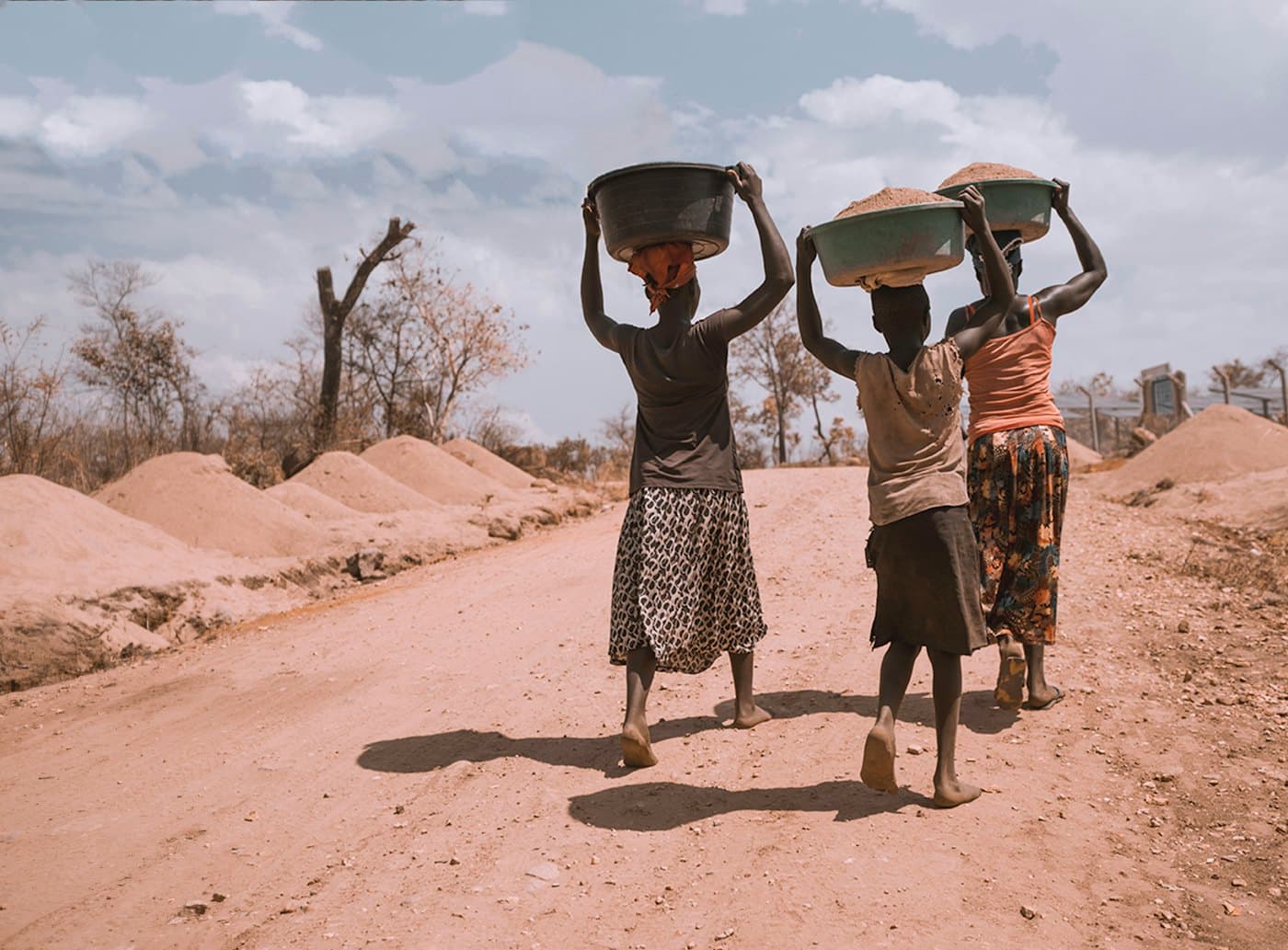
Illustrative photo: Emmanuel Ikwuegbu / Unsplash
If you hold cryptocurrency, you can donate Bitcoin and crypto to Africa in a few minutes. You choose a cause, pay from your own wallet, and receive an emailed receipt once the payment confirms on the blockchain. This guide explains exactly how crypto giving works, which coins you can use, and what to know about taxes.
We'll show how to give crypto to GiveToAfrica, a registered 501(c)(3) nonprofit, EIN 27-3982730. Your gift is recorded against the cause you choose, and every quarter you receive a field report on what it achieved.
This guide is general information, not tax advice. Please check your own situation with a tax adviser.
Why donate crypto to Africa
First, crypto is a natural fit for international giving. It moves across borders quickly, and many holders already think globally. Moreover, if your coins have risen in value, giving them directly can be more tax-efficient than selling them first.
In addition, many crypto holders want their giving to be as transparent as the blockchain itself. That is exactly how we work. Every cause on our site shows its budget, targets and gift amounts before you give, and the field report shows what was actually spent.
Therefore, you can donate Bitcoin and crypto to Africa knowing where it goes, what it buys and how results are measured.
Why give crypto through GiveToAfrica
GiveToAfrica is a registered 501(c)(3) nonprofit, EIN 27-3982730. Consequently, crypto gifts from US donors are generally tax-deductible to the extent allowed by law. You can confirm our registration in the IRS Tax Exempt Organization Search.
Crypto payments are processed through NOWPayments, an established crypto payment processor. You pay from your own wallet or exchange account, and we never see your private keys or seed phrase.
Furthermore, a crypto gift is recorded against your chosen cause exactly like a card gift. For instance, a gift to wells and boreholes funds drilling, pumps and local mechanics, following the published budget. You can read how we work and why we send field reports.
Which cryptocurrencies can you donate?
You can give Bitcoin, Ethereum, USDT and more than 100 other coins. Here are the most common choices.
Bitcoin (BTC)
Bitcoin is the most widely held cryptocurrency and, consequently, a popular choice for larger gifts. However, Bitcoin network fees and minimums can be higher than for some other coins. For example, the minimum Bitcoin payment through our processor has recently been around $22, well below our $50 minimum gift.
Ethereum (ETH)
Similarly, Ethereum is a popular choice. Network ("gas") fees vary with how busy the network is. Therefore, it can be worth checking fees before you send.
Stablecoins such as USDT and USDC
Stablecoins are pegged to the US dollar, so their value doesn't swing while your payment confirms. As a result, many donors prefer them for smaller gifts. Stablecoins are also available on several networks, some with very low fees.
Other coins
Many other coins are accepted, including popular options such as Litecoin and Solana, subject to what our processor supports at the time. The payment page shows the full, current list.
Our Services: causes you can fund with crypto
Crypto can support any of our 38 causes. Here are seven that crypto donors choose often.
Clean water wells
Through wells and boreholes, $50 provides clean water for one person for 10 years, and $500 replaces a hand pump on an existing well. A new borehole serving about 500 people costs around $12,000.
Books, laptops and computer labs
Many crypto donors work in technology. Consequently, books and computers is a natural fit. For example, $400 buys a refurbished laptop with learning software, and $8,000 equips a solar-powered computer lab.
Emergency food aid
When harvests fail, speed matters. Through emergency food aid, $90 provides two months of food parcels for a family of five, and $1,000 feeds 22 families for a month.
Small business grants for women
Crypto donors often value financial independence. Similarly, small business grants give women a grant, training and a mentor. A $250 gift funds a starter grant for a market stall or tailoring business.
Microfinance
Through microfinance, loans are repaid and lent again. For instance, $150 funds a first loan for a small trader. Our target is for each donated dollar to be re-lent at least three times in three years.
Scholarships
A full year of secondary school costs about $1,100 through scholarships. As a result, a single larger crypto gift can put a student through a whole school year.
Where most needed
If you can't choose, give to "where most needed". We will direct your gift to the cause furthest from its goal, and your field report will show where it went.
Step by step: how to donate Bitcoin and crypto to Africa
Here is exactly what happens when you give crypto on our site.
- Choose a cause and amount. Open the donation page, choose a cause, and enter an amount from $50.
- Select crypto. Choose "Crypto" as your payment method and fill in your name and email for the receipt.
- Pick your coin. You are taken to a secure NOWPayments page, where you choose the coin and network.
- Send the payment. Send the exact amount shown from your wallet or exchange, to the address shown.
- Wait for confirmation. Once the blockchain confirms the payment, your gift is completed and your receipt is emailed.
Typically, confirmation takes a few minutes, although it can take longer when a network is busy. You don't need to keep the page open; your receipt will arrive by email.
A quick example: donating Bitcoin to Africa
Imagine you want to donate Bitcoin to Africa for school meals. First, you open the donation page and choose school meals. Next, you enter $225, which covers a full school year of lunches for one child in our current budget. Then you choose crypto, pick Bitcoin on the payment page, and send the amount shown from your wallet.
A few minutes later, the payment confirms. As a result, your gift is recorded against school meals, and your receipt arrives by email. Finally, every quarter, the field report shows how many children were fed and what the meals cost.
Tips for a smooth crypto donation
A few simple habits prevent most problems.
Send the exact amount
Send the exact amount shown on the payment page. If you send less, the gift can't be completed automatically, and it is held for review. In that case, we will contact you by email.
Allow for exchange withdrawal fees
Some exchanges deduct a withdrawal fee from the amount you send. Therefore, if you pay from an exchange, check that the amount arriving will still match the invoice.
Choose the right network
Stablecoins such as USDT exist on several networks. Make sure you send on the network shown on the payment page. Otherwise, the payment may not arrive.
Keep your records
Afterwards, keep your transaction ID and our emailed receipt. You may need both for your tax records, especially for larger gifts that need an appraisal.
Crypto donations and US taxes
First of all, the IRS treats cryptocurrency as property, not currency. That has important consequences for donors.
Long-held crypto that has gained value
If you have held the crypto for more than a year and it has risen in value, donating it directly generally lets you avoid capital gains tax. In addition, you may be able to deduct its fair market value, subject to IRS limits for gifts of appreciated property.
Crypto held for a year or less
If you have held the crypto for a year or less, your deduction is generally limited to what you paid for it. Consequently, the timing of your gift can matter.
Larger crypto gifts
For non-cash gifts over $500, you generally need to file IRS Form 8283 with your return. For crypto gifts over $5,000, the IRS generally requires a qualified appraisal. Therefore, if you plan a large gift, talk to your adviser before you send it.
The 2026 non-itemizer deduction
From 2026, taxpayers who don't itemize can deduct up to $1,000 of cash gifts ($2,000 for married couples) to qualifying charities. However, that deduction applies to cash, not property. As a result, a crypto gift generally only brings a deduction if you itemize.
How your crypto gift reaches the field
After your payment confirms, your gift is recorded at the US dollar value of your invoice. Then it is added to the cause you chose, alongside card and bank gifts to the same cause.
Next, the funds are released to the local partner in stages, against an agreed budget. For example, a borehole is paid for in steps: survey, drilling, pump and then handover. As a result, the next payment only follows proof that the last stage was delivered.
Subsequently, our field staff visit to check the work. Finally, every quarter, you receive a field report showing what was delivered, where and what it cost. In other words, your crypto gift is tracked just as carefully as any other gift.
Moreover, if the cause you chose becomes fully funded, extra gifts go to the next round of the same programme. Therefore, your gift always funds the kind of work you picked. Our terms and refunds explain this in full.
Crypto giving for companies, funds and groups
Crypto giving is not only for individuals. For instance, some companies hold part of their treasury in crypto and want to give some of it away. Similarly, investment clubs and online communities sometimes pool crypto for a shared cause.
If you are giving on behalf of a company or group, please contact us first. That way, we can make sure the receipt is issued to the right donor. In addition, companies can combine a crypto gift with an employee matching programme; see our company giving page.
Likewise, if a group wants to fund a whole project, such as a borehole or a computer lab, we can plan it together. Consequently, everyone involved can follow the same field report.
Giving crypto in memory of someone, or on a regular basis
Crypto gifts can also honour someone. For example, you can add a dedication, such as "In memory of…", in the message field on the donation form. Afterwards, the dedication is recorded with your gift. Our guide to legacy and memorial gifts explains more options.
Meanwhile, recurring crypto gifts are not automated on our site. However, many donors set a monthly reminder and give a stablecoin gift each month. Alternatively, you can set up a monthly card gift and add occasional crypto gifts on top. Either way, steady support helps partners plan ahead, as we explain in our guide to sponsoring a family in Africa.
Crypto, a DAF or cash: which is better?
If you itemize and hold appreciated crypto, giving it directly is often the most tax-efficient option. Alternatively, some donors give crypto to a donor-advised fund that accepts it, then recommend grants over several years.
On the other hand, if you don't itemize, a cash gift by card may bring a small deduction under the new 2026 rules, while crypto may not. Therefore, the best choice depends on your situation.
Crypto giving from communities across the United States
Of course, crypto donors give from every state. Still, a few places stand out.
Miami and South Florida
Miami has become one of America's best-known crypto hubs, and it hosted several of the largest Bitcoin conferences. Consequently, many South Florida donors are comfortable giving crypto, and often fund clean water.
Austin and Texas
Austin has a strong technology scene, and Texas is home to many Bitcoin mining operations. Similarly, many Texas donors give crypto to small business grants and microfinance.
New York and the Northeast
From Manhattan's fintech firms to Boston's universities, many Northeast donors work in finance and technology. As a result, they often give stablecoins to education causes.
San Francisco, Silicon Valley and Seattle
Likewise, the West Coast has many early crypto holders. Many choose books and computers and solar-powered computer labs.
Denver, Wyoming and the Mountain West
Wyoming has passed some of the most crypto-friendly laws in the country, and Denver has a growing blockchain community. Therefore, Mountain West donors often give crypto to drought resilience and farming projects.
How to choose a charity for your crypto gift
Before you send crypto to any organisation, ask four questions. Is it a registered 501(c)(3)? Does it use a reputable payment processor? Will it send a receipt? Will it tell you what your gift achieved?
In addition, be careful with crypto giving scams. Only send crypto through a charity's own website or a well-known platform, never to an address sent by a stranger. For a wider checklist, read how to choose a charity working in Africa.
Contact GiveToAfrica about crypto gifts
We accept crypto gifts from donors in all 50 US states and worldwide. For large gifts, or if a payment hasn't confirmed, email info@givetoafrica.net, use our contact form, or tap the WhatsApp button on this page. We reply within two working days. See our privacy policy for how we handle your details.
Frequently asked questions
Can I donate Bitcoin to Africa?
Yes. Choose a cause on our donation page, select crypto, and pay in Bitcoin from your wallet or exchange. Your receipt is emailed once the payment confirms on the blockchain.
Which cryptocurrencies does GiveToAfrica accept?
Bitcoin, Ethereum, USDT and more than 100 other coins, processed through NOWPayments. The payment page shows the full, current list of coins and networks.
Are crypto donations tax-deductible?
GiveToAfrica is a registered 501(c)(3), EIN 27-3982730, so crypto gifts are generally tax-deductible to the extent allowed by law if you itemize. Crypto is treated as property, so check the rules with your adviser.
What is the minimum crypto donation?
The minimum gift on our site is $50. Some coins have their own network minimums, which are shown on the payment page.
What happens if I send the wrong amount?
If you send less than the amount shown, the gift is held for review rather than completed automatically. We will contact you by email to sort it out.
Ready to donate Bitcoin and crypto to Africa?
Choose a cause from all 38 causes, then give in a few minutes on our donation page. If you have a question first, contact our team. We would be glad to help.
Donate directly to a cause in this guide
Choose a cause and your gift goes straight to it. Gifts start at $50, and are tax-deductible in the United States.
Clean water
Wells and boreholes
Drill a borehole and end the daily walk for water.
Donate to wells and boreholes$0 raised of $72,000
0%
$72,000 to go. Be the first to give.

Education
Books and computers
Textbooks, libraries and solar-powered computer labs.
Donate to books and computers$0 raised of $55,000
0%
$55,000 to go. Be the first to give.
Food and hunger relief
Emergency food aid
Food parcels for families when the harvest fails.
Donate to emergency food aid$0 raised of $70,000
0%
$70,000 to go. Be the first to give.

Women's empowerment
Small business grants for women
Grants and coaching for women starting a business.
Donate to small business grants for women$0 raised of $85,000
0%
$85,000 to go. Be the first to give.
More stories
- Best 501(c)(3) Charities to Donate to Clean Water Wells in Africa: What to Look For in 2026
How to find the best 501(c)(3) charities to donate to clean water wells in Africa. Eight criteria that separate lasting water projects from broken pumps, and how GiveToAfrica measures up.
- Donate to Clean Water Wells in Africa: How Borehole Projects Work and What Your Gift Funds
How to donate to clean water wells in Africa through a 501(c)(3). See what a borehole costs, what keeps it working, and fund a water project directly.
- How to Donate to Africa from the USA: Every Way to Give, and Where Your Money Goes
A practical guide to donate to Africa from anywhere in the United States. Choose a cause, give tax-deductibly to a 501(c)(3), and see exactly what your gift does.