Best 501(c)(3) Charities to Donate to Clean Water Wells in Africa: What to Look For in 2026
How to find the best 501(c)(3) charities to donate to clean water wells in Africa. Eight criteria that separate lasting water projects from broken pumps, and how GiveToAfrica measures up.
GiveToAfrica team · · 11 min read
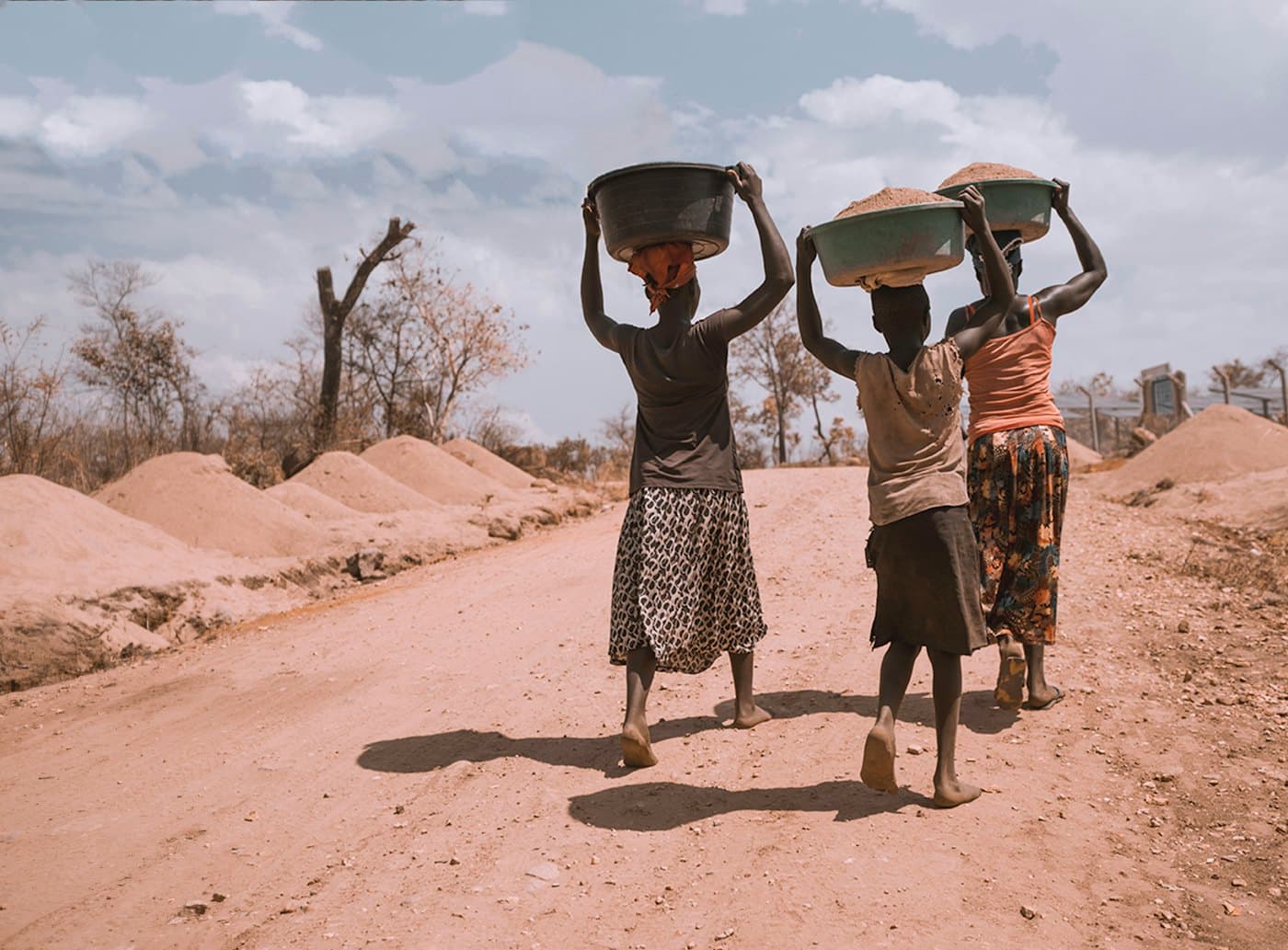
Illustrative photo: Ninno JackJr / Unsplash
If you are searching for the best 501(c)(3) charities to donate to clean water wells in Africa, you have probably noticed that almost every water charity looks similar at first. They all show a new pump and a smiling child. However, the difference between a good water charity and a great one only shows up years later, when you ask whether the well still works.
This guide explains the eight criteria that matter most, how to check them, and how GiveToAfrica, a registered 501(c)(3) nonprofit (EIN 27-3982730), measures up. We'll be honest about where we are strong and where, as a newer charity, we are still building a track record.
Why choosing the right water charity matters
Clean water changes everything in a rural village. For example, it reduces illness, frees women and girls from hours of walking, and keeps children in school. According to WHO and UNICEF, about 2.1 billion people worldwide still lack safely managed drinking water (WHO/UNICEF, 2025).
However, a well that breaks is worse than useless. It raises hopes, then leaves a community back at the river. Unfortunately, many rural water points across Africa do break within a few years, often for simple reasons such as a worn part and no one trained to replace it.
Therefore, the best charities for clean water wells in Africa are not the ones that build the most. Instead, they are the ones whose wells keep working, and who can prove it.
Why the 501(c)(3) part matters
Many donors specifically want a 501(c)(3) water charity. That is sensible, for two main reasons, and both protect you as a donor.
First, gifts to a US-registered 501(c)(3) are generally tax-deductible in the US, while gifts made directly to a foreign organisation generally are not. Second, a 501(c)(3) is subject to US rules on governance and reporting, including annual filings with the IRS for most organisations.
You can confirm any charity's status in the IRS Tax Exempt Organization Search. For example, search for GiveToAfrica using EIN 27-3982730.
Our Services: eight criteria of the best clean water charities
Here are the eight criteria we recommend using to judge any water charity, including us. After each, we explain how GiveToAfrica answers it.
1. They survey before they drill
The most common reason a well comes up dry is drilling in the wrong place. Therefore, the best charities pay for a hydrogeological survey before any drilling starts.
How we answer: our wells and boreholes budget puts 10% into surveys before drilling and laboratory water tests after. We don't drill on guesses.
2. They use licensed local contractors
Good drilling needs proper equipment and skills. Moreover, local contractors keep money in the local economy and are available for repairs later.
How we answer: licensed local contractors drill, case and test each borehole, and payment is released in stages against inspected work. Consequently, a contractor is only paid in full once the water flows and passes its test.
3. They test the water
A well is only safe if the water is tested. Consequently, the best charities test before anyone drinks, and again during follow-up.
How we answer: our target is that 100% of water points pass quality tests before use. If a test fails, the water point is not opened until the problem is fixed and the water passes a retest.
4. They train a water committee and mechanic
This is the single biggest difference between wells that last and wells that break. Therefore, look for charities that train a local water committee and at least one pump mechanic, and stock spare parts.
How we answer: 15% of our wells budget goes to water committees, mechanics, tools and spare parts.
5. They set up a repair fund
Parts wear out, even on the best pumps. Consequently, communities need money ready when they do. The best charities help users pay a small fee into a repair fund.
How we answer: every project sets up a user-funded repair fund, so repairs don't depend on outside help. The committee keeps simple records, which field staff check on each follow-up visit.
6. They follow up and report functionality
Ask any water charity: "What percentage of your wells are still working after a year?" The best ones know the answer.
How we answer: we check water points at 3, 6 and 12 months, with a target of 95% still working after 12 months, and we report the result in the quarterly field report.
7. They publish a clear budget
The best charities show you how your gift is split, not just a headline price. For instance, how much goes to drilling, to pumps, to training and to monitoring?
How we answer: our budget is public. Drilling and casing take 48%, surveys and testing 10%, pump and apron 17%, committees and mechanics 15%, and monitoring 10%.
8. They are honest about limits
Finally, the best charities tell you what they don't know and what went wrong. As a newer charity, we are not yet rated by independent evaluators, and our first full year of accounts is still to come. We say so on our how we work page, and we think that honesty matters.
Drilled boreholes versus hand-dug wells
Not all wells are the same, and the difference affects both cost and safety. Understanding the difference helps you judge any water charity.
Hand-dug wells
A hand-dug well is usually shallow and wide. It is cheaper to build. However, shallow groundwater is more easily contaminated, and hand-dug wells often dry up in the dry season. Consequently, they need careful protection and lining to stay safe.
Drilled boreholes
A drilled borehole is narrow and much deeper, reaching water well below surface contamination. It costs more to build. Nevertheless, a well-sited, properly cased borehole with a good pump can serve a community for decades. That is why our wells and boreholes cause focuses on drilled boreholes, with surveys first.
Rainwater harvesting and filters
Where groundwater isn't suitable, rainwater tanks and household filters are often the right answer. Therefore, the best clean water charities choose the technology that fits the site, rather than promising the same solution everywhere.
Red flags in clean water appeals
Most water charities are sincere. Still, some appeals should make you pause. First, a single fixed price for "a well" with no explanation of depth, site or maintenance. Second, no mention of who repairs the pump. Third, photos of new pumps but no follow-up data. Finally, claims that sound too good to be true, such as clean water for a whole village for a few dollars.
In addition, be cautious of appeals that ask you to send money to an individual for a well. Instead, give through a registered 501(c)(3) that can show its budget and results.
How the best water charities involve communities
A well belongs to the community, not the charity. Therefore, the best charities involve communities from the start. For example, the community helps choose the site, agrees who will look after the pump, and elects a water committee.
Moreover, communities often contribute labour or materials, such as building the concrete apron. As a result, people feel ownership of the well and are more likely to maintain it. By contrast, a well dropped in from outside, with no local ownership, is far more likely to fall into disrepair.
Clean water wells in Africa and the lives of women and girls
Water collection usually falls to women and girls. Consequently, a well near home can transform their days. Girls can attend school instead of walking for water, and women can farm, trade or run a small business.
That is why many donors pair a water gift with keeping children in school or small business grants for women. In other words, the best clean water wells in Africa don't just provide water; they free up time for education and income.
What a clean water gift can fund
Here are examples from our current budgets.
$50 to $100
A gift of $50 provides clean water for one person for 10 years through wells and boreholes. Meanwhile, $80 provides household water filters for two families of six through water purification.
$500 to $600
At this level, $500 replaces a hand pump on an existing well, so a community can drink safe water again within days. Similarly, $600 installs a rainwater tank for a church-run school through faith community development.
$4,500 to $12,000
Larger gifts fund complete infrastructure. For example, about $4,500 builds a block of school latrines through sanitation projects, and about $12,000 funds a new drilled borehole serving around 500 people.
Why repairs can matter as much as new wells
Many donors want to fund a brand-new well, and new wells are vital. However, repairing a broken well can be one of the most cost-effective water gifts of all.
For instance, $500 can bring an existing water point back into use for a community that has fallen back to the river. Consequently, the best water charities fund both new wells and repairs, and they measure how many water points are working, not just how many were built.
Where each dollar goes
When you fund wells and boreholes, about 48 cents of every dollar pays for drilling and casing. Next, 10 cents funds surveys and water testing, and 17 cents buys the pump, apron and drainage. Finally, 15 cents trains water committees and mechanics, and 10 cents covers monitoring and your report.
Therefore, you can see exactly how a $100 gift would be used before you give. Every quarter, the field report compares the plan with what was actually spent.
Questions to ask any water charity
Before you give, ask these questions. A good charity will answer readily.
First, "What percentage of your water points were working one year after completion?" Second, "Who repairs the pump, and who pays?" Third, "Do you survey before drilling?" Fourth, "Can I see a budget?" Finally, "What will I hear after I give?"
If a charity can't answer, keep looking. For a wider checklist, read how to choose a charity for Africa.
How ratings fit in
Independent evaluators, such as Candid and Charity Navigator, can be a helpful starting point for larger charities. However, many newer and smaller charities, including GiveToAfrica, are not yet rated simply because they are new.
Therefore, use ratings as one signal among several. The eight criteria above work for any water charity, rated or not. In fact, a charity that publishes its budget, targets and one-year functionality results is giving you more useful information than a star rating alone.
How to donate to clean water wells in Africa from the USA
Here are the ways US donors most often give.
Give online
The quickest way is our donation page. First, choose wells and boreholes or another water cause. Next, pick an amount; gifts start at $50. Then complete the secure form, and your tax receipt arrives by email.
Give monthly
Monthly gifts help partners plan drilling seasons ahead. When you pay by card, choose "Monthly" on the donation form. See our guide to monthly giving to Africa.
Give crypto, or from a DAF or IRA
You can give Bitcoin and more than 100 other coins; see our guide to donating crypto to Africa. Alternatively, recommend a donor-advised fund grant using EIN 27-3982730; see our DAF guide.
Fund a whole well
If you, your family, church or company want to fund a complete borehole, contact us first. We'll explain the costs and how the project is reported. Companies can also match gifts; see company giving.
Supporting clean water in Africa from across the United States
Donors in every state fund water projects. Here are some regional patterns.
Texas, Arizona and the Southwest
Families in drought-prone states often understand water scarcity first-hand. Consequently, many Southwest donors fund both boreholes and drought emergency water trucking.
The Great Lakes and Midwest
Communities around the Great Lakes remember water-quality crises close to home. As a result, many Midwest donors care deeply about testing and filtration.
Churches in the South
Many Southern congregations fund wells as part of their mission giving. Similarly, church-led projects often include rainwater tanks for church-run schools.
Families on the West Coast
In California, Oregon and Washington, many donors give monthly or in crypto to clean water, often alongside environmental causes.
Donors in New York and the Northeast
From Manhattan to Boston, many Northeast donors give through workplace matching programmes, which can double a water gift. In addition, schools and universities across New England often adopt a water project as a class or campus fundraiser. Consequently, Northeast donors frequently fund complete boreholes together rather than alone. If your group wants to do the same, volunteer with us and we'll help you organise it.
Contact GiveToAfrica
We accept donations from all 50 US states and from supporters worldwide. To ask where this round's water projects are, or to fund a whole well, email info@givetoafrica.net, use our contact form, or tap the WhatsApp button on this page. We reply within two working days. See our privacy policy and terms.
Frequently asked questions
What makes the best charity for clean water wells in Africa?
The best water charities survey before drilling, test the water, train local committees and mechanics, set up repair funds, and report how many wells still work a year later.
Are donations to clean water charities tax-deductible?
Gifts to a US-registered 501(c)(3), such as GiveToAfrica (EIN 27-3982730), are generally tax-deductible in the US to the extent allowed by law.
How much does it cost to build a well in Africa?
A new drilled borehole serving about 500 people costs around $12,000 in our current budget. Repairing an existing well can cost about $500.
Is GiveToAfrica rated by Charity Navigator?
Not yet. As a newer charity, we are not yet rated. Instead, we publish our budgets and targets and send every donor a quarterly field report.
How do I know my well will keep working?
Ask the charity for its one-year functionality rate. Our target is 95% of water points still working after 12 months, and we report the result every quarter.
Ready to fund a clean water well?
Choose a cause from our clean water area or all 38 causes, then give on our donation page. For the full picture, read our guide to donating to clean water wells in Africa.
Donate directly to a cause in this guide
Choose a cause and your gift goes straight to it. Gifts start at $50, and are tax-deductible in the United States.
Clean water
Wells and boreholes
Drill a borehole and end the daily walk for water.
Donate to wells and boreholes$0 raised of $72,000
0%
$72,000 to go. Be the first to give.
Clean water
Water purification
Household filters that make river and rain water safe to drink.
Donate to water purification$0 raised of $60,000
0%
$60,000 to go. Be the first to give.
Clean water
Sanitation projects
Toilets and handwashing stations for schools and villages.
Donate to sanitation projects$0 raised of $55,000
0%
$55,000 to go. Be the first to give.
Disaster and humanitarian relief
Drought emergency response
Water trucking, food and livestock support when the rains fail.
Donate to drought emergency response$0 raised of $65,000
0%
$65,000 to go. Be the first to give.
More stories
- Donate to Clean Water Wells in Africa: How Borehole Projects Work and What Your Gift Funds
How to donate to clean water wells in Africa through a 501(c)(3). See what a borehole costs, what keeps it working, and fund a water project directly.
- How to Donate to Africa from the USA: Every Way to Give, and Where Your Money Goes
A practical guide to donate to Africa from anywhere in the United States. Choose a cause, give tax-deductibly to a 501(c)(3), and see exactly what your gift does.
- How to Sponsor a Child Through School in Rural Kenya Securely: A Safe, Tax-Deductible Guide
How to sponsor a child through school in rural Kenya securely: what school actually costs, how to avoid sponsorship scams, how fees reach schools safely, and how to give tax-deductibly from the US.