Donate to Education in Africa: Build Schools, Fund Scholarships and Put Books in Every Classroom
How to donate to education in Africa through a 501(c)(3): build classrooms, fund scholarships, supply textbooks and train teachers. See what each gift buys.
GiveToAfrica team · · 11 min read
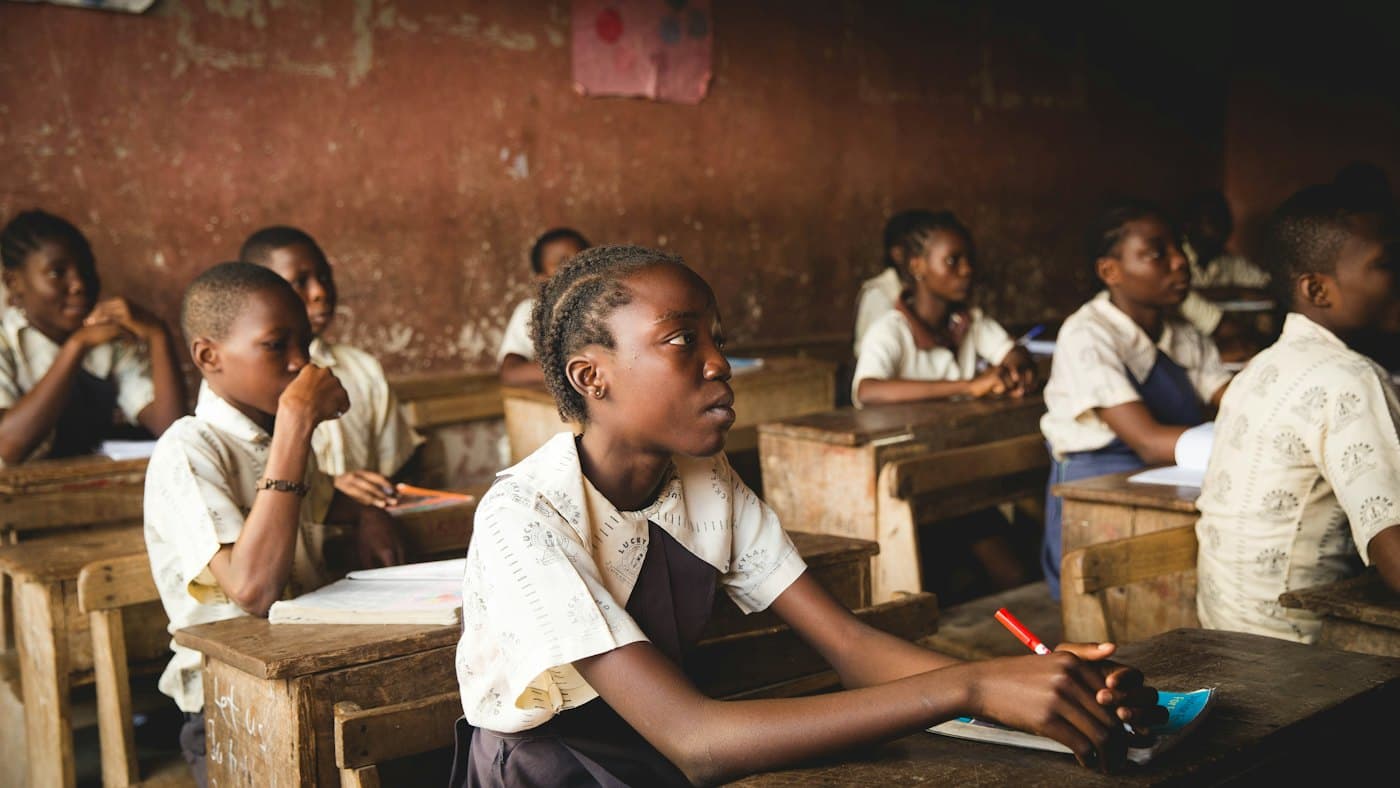
Illustrative photo: Doug Linstedt / Unsplash
If you want to donate to education in Africa, you are backing one of the most lasting gifts there is. A child who learns to read, finishes school and gets a qualification changes their family's future. This guide explains where education gifts do the most good, what they cost, and how to give safely from the United States.
We'll also show how to give through GiveToAfrica, a registered 501(c)(3) nonprofit. You choose an education cause, from classrooms to scholarships, and your gift is recorded against it. Then, every quarter, you receive a field report on what was built, bought and achieved.
Why donate to education in Africa now
Africa has the youngest population in the world, and millions of children are ready to learn. However, too many of them are not in school. According to UNESCO, sub-Saharan Africa is home to more than half of all the world's out-of-school children and young people (UNESCO GEM Report).
The reasons are practical. For example, there are not enough classrooms, so children learn under trees or in crowded rooms. Meanwhile, many families cannot afford fees, uniforms or exam costs. In addition, many schools have one textbook for several pupils, and teachers with little training.
Therefore, the most effective way to donate to education in Africa is to remove those barriers one by one. Classrooms, fees, books, teachers and meals each solve a different part of the problem.
Why donate to education through GiveToAfrica
Many education appeals ask you to "support a school" without saying what that means. We work differently. Instead, every education cause shows its budget and targets before you give.
For instance, the school construction page shows that 65% of the budget goes to building materials and local builders. Meanwhile, 12% buys desks and furniture, 10% adds water and latrines, 6% pays for independent engineering checks, and 7% covers monitoring and your report.
Additionally, GiveToAfrica is a registered 501(c)(3) nonprofit, EIN 27-3982730. Consequently, gifts from US donors are tax-deductible to the extent allowed by law. Your email receipt arrives as soon as your payment clears.
Most importantly, we report results, not just activity. Field reports show classrooms handed over, textbooks delivered, attendance and test scores. You can read why we send field reports and how we work.
Our Services: education projects you can fund in Africa
A good education needs a classroom, a teacher, books, and a child who can afford to attend. Here are seven education projects you can fund through GiveToAfrica, each linked to a cause you can give to directly.
Building safe primary and secondary school classrooms
Across rural Africa, many pupils still learn under trees or in crumbling mud-brick rooms. Our school construction cause builds safe, durable classrooms that follow government school standards.
A complete classroom with desks and a blackboard costs about $15,000 in our current budget. However, smaller gifts build it piece by piece. For instance, $60 buys a desk for three pupils, and $500 buys a classroom's roofing sheets.
Furthermore, an independent engineer inspects each building stage. As a result, every classroom is handed over safe, and our target is 400 more pupils learning under a proper roof this round.
Scholarships for bright students
Many talented students leave school because their families cannot pay secondary or university fees. Our scholarships cause funds them through to graduation, with a mentor who meets them every term.
For example, $80 provides books and supplies for a scholar for a year. Similarly, $350 pays a term of secondary school boarding fees, and $1,100 covers a full year of secondary school.
Selection is fair and transparent, run with schools and community panels. Moreover, our target is that 60% of scholars are girls, who are most likely to leave school early.
Textbooks, reading books and computers
A pupil who shares one textbook with four classmates cannot study at home. Therefore, our books and computers cause delivers textbooks and readers in local languages and English.
A gift of $60 buys sets of core textbooks for two pupils. Meanwhile, $400 buys a refurbished laptop with learning software, and $8,000 equips a solar-powered computer lab for a secondary school.
Additionally, teachers are trained to run reading programmes and teach digital skills. The goal is simple: every pupil in partner schools with their own book.
Teacher training and classroom coaching
Buildings and books only work with good teaching. However, many teachers in rural schools have had little formal training. Our teacher training cause runs practical courses and then coaches teachers in their own classrooms for a year.
For instance, $80 buys teaching materials for two classrooms. Similarly, $150 funds a five-day training course for one teacher, and $1,800 pays for a year of in-class coaching for a whole school's teachers.
Consequently, one gift reaches every pupil that teacher will ever teach. Our target this round is 200 teachers trained, reaching about 10,000 pupils.
Paying fees so children stay in school
Some children are enrolled but at risk of dropping out. Often, the reason is a fee, a missing uniform or a family crisis. Our keep children in school cause pays fees directly to the school, never in cash to families.
A gift of $50 buys exercise books, pens and school bags for two pupils. Meanwhile, $120 buys uniforms and shoes for two pupils, and $180 covers a year of fees and exam costs for one pupil. Mentors visit any family whose child misses three days in a row.
School meals that keep pupils learning
Hunger is one of the biggest reasons children miss school or cannot concentrate. Therefore, our school meals cause serves a hot lunch every school day.
A gift of $75 feeds one child for a whole term, and $225 covers a full school year. In addition, school gardens teach pupils to grow vegetables that top up the meals.
School latrines so girls stay in class
Without a safe toilet, many girls stay home during their periods and fall behind. Our sanitation projects cause builds separate, lockable latrine blocks for girls and boys, with hand-washing stations.
A full block of latrines for a school costs about $4,500. Meanwhile, $250 provides menstrual hygiene kits for 50 girls. As a result, girls can attend every day of the month.
What an education gift changes
Education gifts work slowly, but their effects last a lifetime. Here is what we measure and report on over time.
Better attendance and fewer dropouts
When fees are paid and lunch is served, attendance rises quickly. Similarly, when girls have safe toilets and sanitary kits, they stop missing a week of school every month. Our targets for keep children in school include attendance above 90% for supported pupils.
Stronger reading and maths
Books and trained teachers show up in test scores. Therefore, our reading programmes measure pupils before and after, and the field report shows the change. In fact, teacher coaching is often the single biggest driver of better results.
Qualifications and jobs
Scholars who finish secondary school or university go on to careers that support their families. Likewise, older young people can learn a trade through vocational training. Consequently, education gifts feed directly into job creation and entrepreneurship training later on.
Where each dollar goes when you donate to education in Africa
Every education cause has its own planned budget, and you can see it before you give. For example, when you fund scholarships, about 55 cents of every dollar pays tuition and fees directly to the school or university. Next, 20 cents covers boarding and books, and 12 cents pays for mentoring. Finally, 5 cents funds fair selection, and 8 cents covers monitoring and your report.
Similarly, the teacher training budget puts 35% into workshops and 30% into in-class coaching. The rest buys teaching materials, supports head teachers and pays for classroom observations. Therefore, you always know how a $100 gift will be split.
Every quarter, the field report compares that plan with what was actually spent. If costs change, for instance because cement prices rise, the report says so and explains what we did about it.
Education for girls in Africa
Girls face extra barriers to finishing school. For example, they are more likely to be kept home to fetch water, care for siblings or marry early. Therefore, several of our causes focus on keeping girls in class.
First, scholarships aim for at least 60% girls among scholars. Next, school latrines and sanitary kits mean girls don't miss school every month. In addition, safe motherhood and small business grants help mothers, who are the most likely to insist their daughters finish school.
As a result, a gift to girls' education often supports the next generation too. Educated mothers tend to have healthier children and to keep their own children in school.
How to donate to education in Africa from the USA
Here are the ways US donors most often fund schools and scholarships in Africa.
Donate online to an education cause
The quickest way is our donation page. First, choose an education cause such as scholarships. Next, pick an amount; gifts start at $50. Then complete the secure form, and your receipt arrives by email.
Donate Bitcoin or crypto for education
You can give Bitcoin, Ethereum, USDT and more than 100 other coins to any education cause. Simply choose crypto on the donation form. Your gift is recorded against the cause you chose, and your receipt follows automatically.
Give from a donor-advised fund or IRA
You can recommend a donor-advised fund grant to GiveToAfrica using EIN 27-3982730. Write the cause, such as "school construction", in the grant note.
If you are 70½ or older, a qualified charitable distribution from your IRA may also be possible. However, contact us first, so we can confirm the details.
Fund a whole classroom
Some donors, families and companies want to fund a complete classroom or computer lab. If that is you, contact us before you give. Companies can also sponsor classrooms or match staff gifts; see our company giving page.
Give monthly
Scholarships and school meals depend on steady funding over the whole school year. Therefore, monthly gifts are especially useful. When you pay by card, choose "Monthly" on the donation form and cancel any time.
Funding education in Africa from across the United States
You can support schools in Africa from any US state. Here is how donors in different regions often get involved.
Donors in Boston and the university towns of the Northeast
Boston, New Haven and Philadelphia are full of universities, teachers and students. Consequently, many donors in Massachusetts, Connecticut and Pennsylvania fund scholarships and teacher training. Some student groups raise money together; you can volunteer with us to organise a campus fundraiser.
Donors in the Research Triangle and the Southeast
North Carolina's Research Triangle, along with Atlanta, has many educators and health professionals. Similarly, churches across the Southeast have long supported mission schools. As a result, donors in the region often fund school construction and school meals.
Donors in Houston, Dallas and Texas
Texas has large Nigerian and Ghanaian communities, many with a strong tradition of valuing education. Therefore, Texas donors often choose scholarships that take students through secondary school and university.
Donors in Silicon Valley and the West Coast
The San Francisco Bay Area and Seattle are home to many technology workers. Unsurprisingly, many choose books and computers and solar-powered computer labs. Many also give cryptocurrency.
How to choose an education charity in Africa
Before you give to any school appeal, ask four questions. Is the charity registered? Does it pay fees directly to schools? Are buildings independently inspected? Does it measure learning, not just enrolment?
We answer each of those on our education cause pages. For a wider checklist, read how to choose a charity working in Africa. You can also check any US charity in the IRS Tax Exempt Organization Search; for GiveToAfrica, search for EIN 27-3982730.
What happens after you donate to education in Africa
First, your email receipt arrives as soon as your payment clears. Next, your gift is recorded against the education cause you chose, and released to the local partner in stages.
Subsequently, field staff check each stage: foundations, walls and roof for classrooms, and delivery for books. Finally, every quarter, you receive a field report on what was built, bought and learned, and what it cost. If a cause becomes fully funded, extra gifts go to the next round of the same programme, as our terms explain.
Contact GiveToAfrica about education projects
We accept donations from all 50 US states and from supporters worldwide. Education projects are delivered by vetted local partners across Africa, through our education causes and all 38 causes on this site.
Have a question before you give? Email info@givetoafrica.net, use our contact form, or tap the WhatsApp button on this page. We reply to every message within two working days.
Frequently asked questions
How much does it cost to build a school classroom in Africa?
In our current budget, a complete classroom with desks and a blackboard costs about $15,000. Smaller gifts help build it; for example, $500 buys a classroom's roofing sheets and $60 buys a desk for three pupils.
How much does a scholarship in Africa cost?
A full year of secondary school costs about $1,100 in our current budget, and a term of boarding fees about $350. A gift of $80 covers a scholar's books and supplies for a year.
Are donations to education in Africa tax-deductible?
Yes. GiveToAfrica is a registered 501(c)(3) nonprofit, EIN 27-3982730, so gifts from US donors are tax-deductible to the extent allowed by law. Your email receipt is valid for your tax records.
Can I donate Bitcoin to education in Africa?
Yes. Choose crypto on the donation form to give Bitcoin, Ethereum, USDT or more than 100 other coins to any education cause. Your receipt is emailed once the payment confirms.
How do I know my education donation was used well?
Every quarter, you receive a field report showing what was built or delivered, what it cost, and results such as attendance and test scores. Buildings are also inspected independently at each stage.
Ready to donate to education in Africa?
You have seen how education gifts work and what they buy. Now choose the project that matters most to you, from classrooms to scholarships. Alternatively, give where it is needed most today.
If you have a question first, contact our team. We would be glad to help you choose.
Donate directly to a cause in this guide
Choose a cause and your gift goes straight to it. Gifts start at $50, and are tax-deductible in the United States.
Education
School construction
Build safe classrooms where children now learn under trees.
Donate to school construction$0 raised of $60,000
0%
$60,000 to go. Be the first to give.
Education
Scholarships
Secondary and university scholarships for bright students who can't afford fees.
Donate to scholarships$0 raised of $130,000
0%
$130,000 to go. Be the first to give.
Education
Books and computers
Textbooks, libraries and solar-powered computer labs.
Donate to books and computers$0 raised of $55,000
0%
$55,000 to go. Be the first to give.
Education
Teacher training
Better teaching methods for teachers in overcrowded classrooms.
Donate to teacher training$0 raised of $45,000
0%
$45,000 to go. Be the first to give.
More stories
- Best 501(c)(3) Charities to Donate to Clean Water Wells in Africa: What to Look For in 2026
How to find the best 501(c)(3) charities to donate to clean water wells in Africa. Eight criteria that separate lasting water projects from broken pumps, and how GiveToAfrica measures up.
- Donate to Clean Water Wells in Africa: How Borehole Projects Work and What Your Gift Funds
How to donate to clean water wells in Africa through a 501(c)(3). See what a borehole costs, what keeps it working, and fund a water project directly.
- How to Donate to Africa from the USA: Every Way to Give, and Where Your Money Goes
A practical guide to donate to Africa from anywhere in the United States. Choose a cause, give tax-deductibly to a 501(c)(3), and see exactly what your gift does.